Commercial Roof Inspection: What It Covers, When to Schedule One, and Why It Matters
A commercial roof inspection is a professional evaluation of a commercial roof's condition that identifies leaks, damage, drainage problems, and wear before they lead to failure, and produces a documented report the building owner can act on.
It is the single most valuable thing a facility manager can do for a roof, because almost every expensive roofing problem starts as a small one that an inspection would have caught. At Guy Roofing, we have inspected commercial roofs across the country since 1970, and the lesson is always the same: the cost of an inspection is trivial next to the cost of the leak it prevents. This guide explains what a commercial roof inspection includes, when you should schedule one, what the report should tell you, and how inspections protect both your warranty and your budget.
What Does a Commercial Roof Inspection Include?
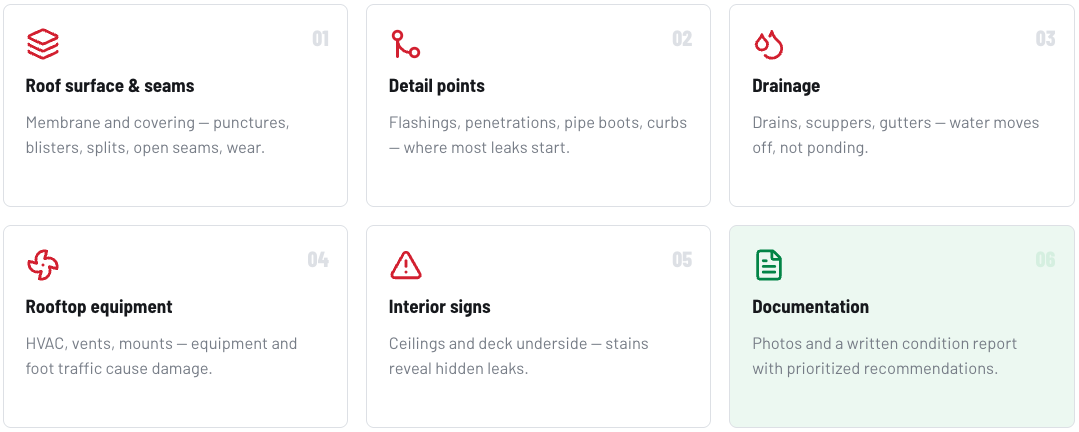
A complete commercial roof inspection covers far more than the surface. A Guy Roofing inspection looks at:
• Roof surface and seams: the membrane or covering, checking for punctures, blisters, splits, open seams, and general wear.
• Detail points: flashings, penetrations, pipe boots, and the curbs around rooftop equipment, which are the most common origin points for leaks.
• Drainage: drains, scuppers, and gutters, confirming water moves off the roof rather than ponding on it.
• Rooftop equipment: HVAC units, vents, and anything mounted on the roof, since equipment and the foot traffic around it cause a large share of damage.
• Interior signs: ceilings and the underside of the deck where accessible, because interior stains reveal active leaks the surface may hide.
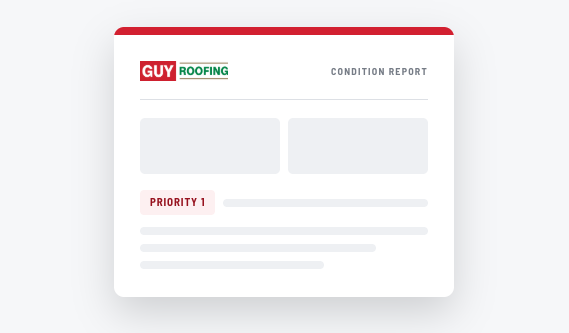
• Documentation: photo documentation and a written condition report with prioritized recommendations.
When Should You Schedule a Commercial Roof Inspection?
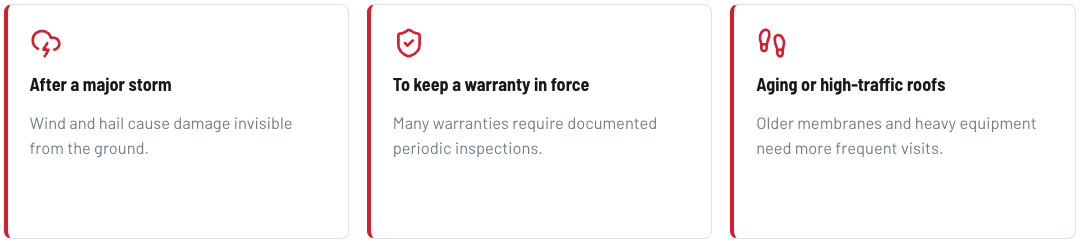
As a baseline, a commercial roof should be professionally inspected at least twice a year, once in the spring and once in the fall, the cadence recommended by the National Roofing Contractors Association. Beyond that routine schedule, you should also inspect:
• After any major storm: severe wind, hail, or heavy storms can cause damage that is invisible from the ground but compromises the roof.
• To keep a warranty in force: many warranties require periodic documented inspections to stay valid, so an inspection protects your coverage.
• On aging or high-traffic roofs: an older membrane or a roof with heavy foot traffic and equipment benefits from more frequent visits.
What You Get: The Inspection Report
An inspection is only as useful as the report it produces. A strong commercial roof inspection report gives you photo documentation of every issue found, a clear assessment of the roof's overall condition, a prioritized list of recommended repairs, and guidance you can use to plan and budget. Over time, a series of these reports becomes a condition history that turns your roof from a guessing game into a managed asset, so you are planning for an eventual replacement on your schedule rather than reacting to an emergency on the roof's.
Inspection Methods Beyond the Visual
A visual inspection catches most surface issues, but moisture often hides inside the roof system long before it shows on top. That is why a complete assessment can include infrared moisture scanning, which finds wet insulation trapped beneath the membrane, and, where needed, core sampling to confirm what is happening inside the assembly. Finding trapped moisture early is often the difference between a targeted repair and a full tear-off later.
How Inspections Protect Warranties and Insurance Claims
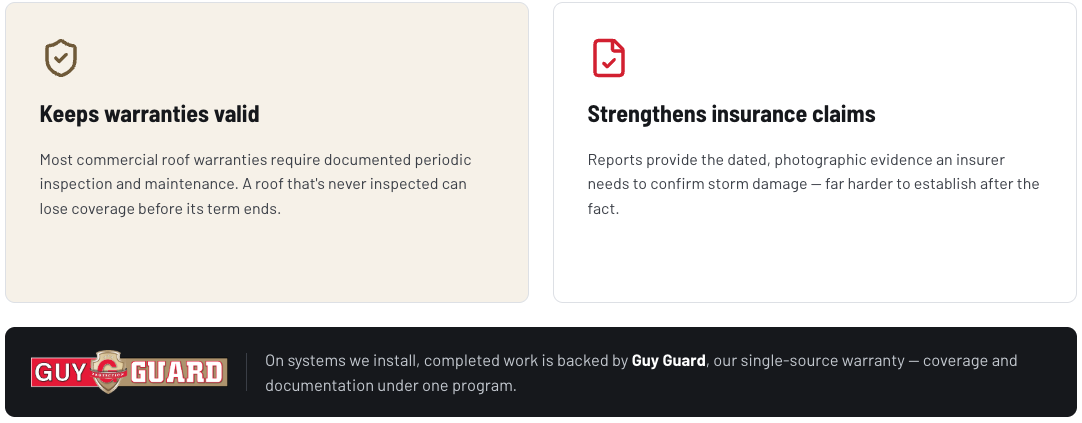
Documentation is where inspections quietly pay for themselves. Most commercial roof warranties require evidence of periodic inspection and maintenance to remain valid, so a roof that is never inspected can lose its coverage before the term ends. Inspection reports also provide the dated, photographic evidence an insurer needs to process a storm-damage claim. A roof inspection feeds naturally into an ongoing commercial maintenance program, and on systems we install, that completed work is backed by Guy Guard, our single-source warranty, so coverage and documentation live under one program.
Inspecting Multi-Site and National Portfolios
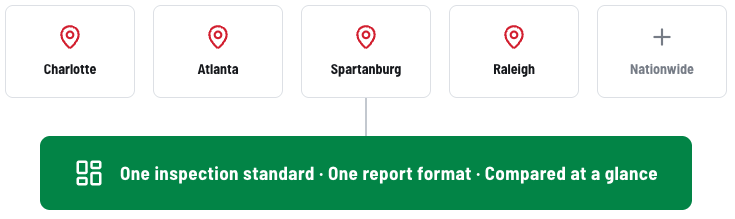
For organizations with buildings in more than one market, the challenge is consistency. Different local contractors inspect to different standards, and a facility director ends up comparing reports that do not line up. Guy Roofing's commercial scope is nationwide, and our national accounts program brings every location under one inspection standard and one reporting format, so the condition of every roof in the portfolio can be compared at a glance.
Frequently Asked Questions
What is a commercial roof inspection?
A commercial roof inspection is a professional evaluation of a commercial roof's condition that identifies leaks, damage, drainage problems, and wear, and produces a documented report with prioritized recommendations the building owner can act on.
What does a commercial roof inspection include?
A complete inspection covers the roof surface and seams, flashings and penetrations, drainage, rooftop equipment, and interior signs of leaks, and ends with photo documentation and a written condition report. It can also include infrared moisture scanning to find water trapped inside the roof system.
How often should a commercial roof be inspected?
A commercial roof should be professionally inspected at least twice a year, in spring and fall, plus after any major storm. Older roofs and roofs with heavy equipment or foot traffic benefit from more frequent inspections.
Do I need a roof inspection to file an insurance claim?
A documented inspection greatly strengthens a claim. Inspection reports provide the dated, photographic evidence an insurer needs to confirm storm damage and process the claim, which is much harder to establish after the fact.
Can an inspection void or protect my roof warranty?
Inspections protect it. Most commercial roof warranties require documented periodic inspection and maintenance to stay valid, so regular inspections keep your coverage in force rather than letting it lapse.
Does a roof inspection really save money?
Yes. Inspections catch small, inexpensive problems before they become leaks, interior damage, or premature roof failure, which are far more costly. They also let you plan and budget for repairs and replacement instead of facing emergencies.
Know the true condition of your roof before the next storm does. Contact Guy Roofing to schedule a commercial roof inspection for one building or an entire national portfolio.